“I Don’t Want to Think About Perimenopause” — Why So Many of Us Avoid It, and Why That Can Cost Us
Maybe you have caught yourself doing it. Someone mentions perimenopause — a friend, a podcast, an article like this one — and something in you quietly changes the subject. Not me. Not yet. I’d rather not go there. I don’t want to think about it.
Perhaps you tell yourself you want to stay natural and avoid medication. Perhaps you feel too young for any of this to apply to you. Or perhaps you have simply decided to get on with it quietly, without any fuss, because that is what “strong” women do.
If any of that sounds familiar, I want you to know two things.
First: I understand completely, and there is no judgement here — I hear some version of this from women almost every week, friends, clients, podcast guests, random women I meet when I go out and I’m being asked what I do for a living. And the truth is that I have felt the pull of it myself. Part of me doesn’t want to reveal my age (after all, we are all brainwashed to associate youth with beauty) and another part of me wants the HRT to be my secret anti-aging weapon! Crazy, huh?
Second: In this blog I want to gently show you what I have learned over 25 years of working with women — that this avoidance, however natural and however sensible it sounds, can quietly cost us our health. So let’s look together at the three most common ways we turn away from this subject, and at the beliefs hiding underneath them — so that whatever you decide for your body, you decide it with clear eyes. Unless you are one of the lucky 10-15% of women who really never experience perimenopausal symptoms.
But first, a quick and honest word. Everything here is my own view. It comes from my own reading of science, from living through perimenopause myself, and from the women I have worked with for 25 years. It is not medical advice, and I am not telling you what to do. I only want to open up a conversation that too many women are never invited into.
Avoidance Rarely Looks Like Avoidance
Here is the interesting part. When we avoid the subject of perimenopause, it almost never feels like fear or denial from the inside. It feels sensible. Reasonable. Sometimes even admirable.
That is exactly what makes it so easy to live with for years. Each of the three sentences below sounds perfectly fair on the surface. But underneath each one sits a belief that is rarely questioned — and that is exactly where the quiet cost lies. Let me take them one at a time.
1. “I Want to Be Natural. I Don’t Want to Take Medication.”
I love this instinct. Living naturally, being kind to our bodies, not reaching for a pill for everything — there is real wisdom in it, and I respect it deeply. I have tried my very best to live this way until I really couldn’t. The whole idea of studying functional medicine was for me driven by my wish to optimise my body through nutritional and lifestyle changes to avoid taking medication.
But here is what I notice. Many women put HRT (hormone replacement therapy) in the same box as “medication” — something chemical and foreign to be avoided. And HRT is not really like that.
Most medications add something new to your body. HRT does something different. It simply replaces the hormones your body made for decades and is now making less of. It is closer to topping up what you are losing than to introducing something strange.
So much of our fear of HRT can be traced back to one widely publicised (and now widely criticised) study — the Women’s Health Initiative, from 2002. When its first results came out, the headlines linked HRT to breast cancer, and it caused panic. Almost overnight, women and doctors stopped using it.
But, the way those results were reported was misleading — the risk was made to look far bigger, and more certain, than the study actually showed. Since then it has been re-examined and heavily questioned, partly because most of the women in it were much older (in their 60s and more than 10 years since menopause!) than those who usually start HRT in perimenopause. The newer analysis links HRT (when started at the right time), with real benefits: for quality of life, for bone strength, and for protecting the heart and brain.
I am not telling you to take HRT. That is a decision for you and a good doctor who knows your history. I am only asking you to make it from facts, not from an old, frightening headline. Because I believe a whole generation of women was, in effect, trained to fear it. And potentially as a consequence are now experiencing the reality with increased rates of Alzheimer’s disease, Osteoporosis, and Cardiovascular Health problems. The prescription rates for statins and antidepressants have actually skyrocketed in the last 25 years, and more so for women than men…
2. “I’m Too Young. This Doesn’t Apply to Me.”
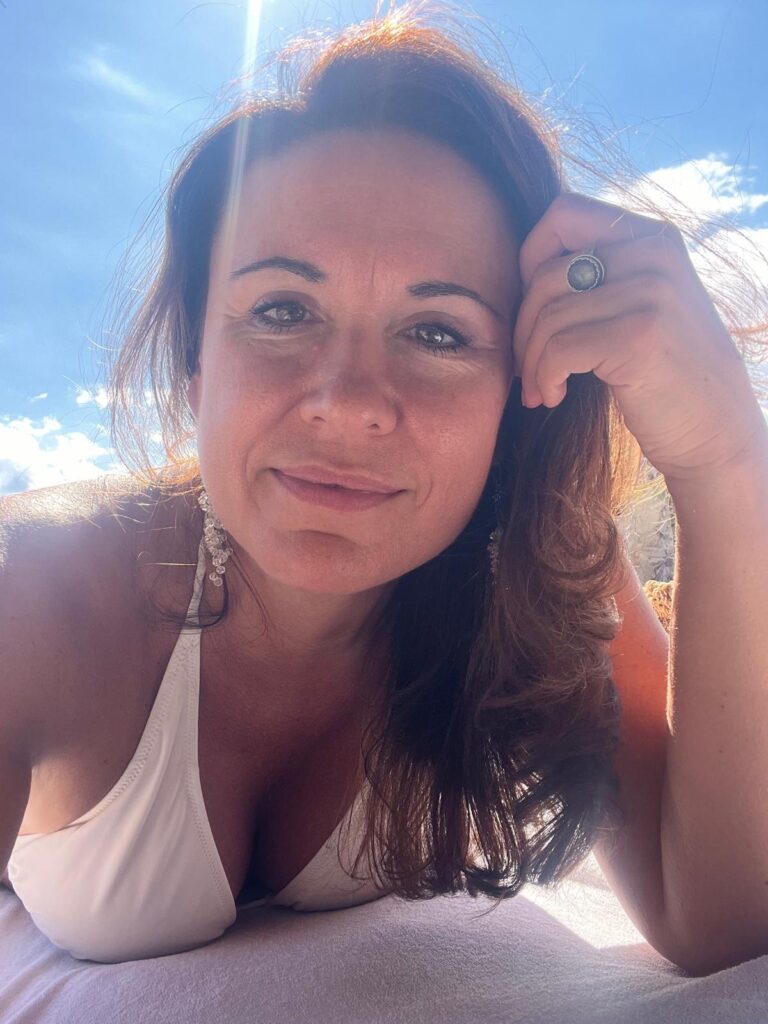
I hear this often, usually from women in their late 30s and 40s. And I understand it — if you feel well, why go looking for trouble?
But it does apply to you, no matter how healthy you are. As oestrogen falls, every woman loses some muscle and some bone density. The only question is how fast — and whether you understand it in time to do something about it. And I don’t necessarily mean taking HRT, I’m talking about exercising, lifting weights and adjusting your diet in the first instance.
And this is not about looks. In the long run, it is about staying mobile and independent. Less bone density means weaker bones, and weaker bones mean fractures. We tend to picture a broken hip in old age as something you simply recover from. The reality is far more serious than most people realise.
There is one more thing I feel strongly about, because the fear is so often pointed the wrong way. When I ask women what they fear most, the answer is usually breast cancer. That fear deserves respect. But over a woman’s whole lifetime, heart disease takes more women’s lives than all cancers combined. Oestrogen helps protect the heart — and when it drops, that protection drops too. Yet heart disease is simply not the thing most of us were taught to worry about. We are taught to see it as a natural part of getting older.
And then there is the brain. Around 70% of Alzheimer’s diagnoses are in women. I personally believe this is closely linked to falling oestrogen, because there are oestrogen receptors in every part of the brain, because it governs how well nourished your brain is –– brain low in oestrogen struggles to utilise glucose for fuel.
So when a woman tells me she is too young to think about this, I understand. But thinking about it early is the whole point. It is not borrowing trouble. It is having the information while you still have the most choices open to you. And the research indicated that HRT provides the strongest protection when started 6 years before menopause! But how many of us are aware of it? I certainly wish I had started my HRT sooner.
3. “I Want to Age With Dignity and Grace.”
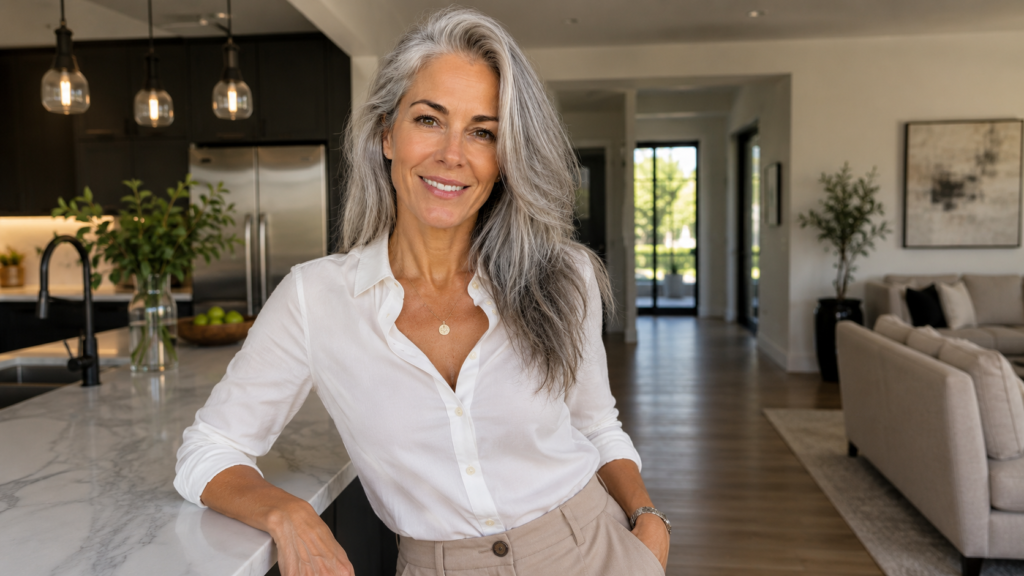
This is the one I feel most tenderly about, because there is so much that is beautiful in it. And so much that I also personally aspire to: “I want to go grey. I want to embrace my wrinkles. I don’t want to fight my age.”
There is nothing wrong with that. It is wonderful. It is a healthy refusal of an industry that profits from making women feel they are never enough. But let’s be honest with each other, because two very different things often get mixed up here.
One is aging with grace. The other is something I see worn almost like a badge of honour, especially here in the UK — “braving it through.” Quietly putting up with symptoms that are stealing your sleep, your focus, your energy and your joy, as if simply enduring them were something to be proud of.
Embracing your grey hair is one thing. Silently suffering through brain fog, broken nights, aching joints and anxiety — and calling that grace — is something else. Something I don’t agree with.
And I understand where it comes from. So many of us were raised not to show that we are struggling. Not to look weak, or tired, or less capable — especially at work, in a world built around men, where showing difficulty (or age if you are a woman) can feel like risking the promotion, the respect, the recognition you have worked so hard for. So we cope. We say we’re fine.
But suffering in silence is not dignity. You can age naturally, refuse the pressure to look 25 forever, and still choose to deal with symptoms that are stealing your quality of life. Those two things do not cancel each other out. It’s not about pretending we don’t age or trying to hide the signs of it. It’s about reducing the unnecessary suffering and improving the quality of our life whenever we can.
What Connects All Three
When I sit with these three sentences, I see the same thing underneath all of them. And it is not really about the women saying them. It is about the story our culture — and a lot of conventional medicine — has told us about menopause for generations.
It is a story about decline. The end of youth. The end of beauty. The fear of becoming invisible, of no longer “mattering”. And when that is the story playing quietly in the background, of course we look away. Who wants to walk towards their own disappearance?
That is the story I want to help changing. Because I do not believe it is true. So let me gently put a few of these myths to rest.
A Few Myths Worth Letting Go Of
- “HRT causes cancer.” The truth is far more nuanced than the old headlines suggested. For many women, when started at the right time, the benefits outweigh the risks. This is a conversation to have with your doctor — not a door to close out of fear.
- “I’m too young for this.” The changes begin quietly, years before your periods stop. The earlier you understand them, the more you can do.
- “Coping in silence is strength.” Asking for support is not weakness. It is self-respect.
- “Menopause is the beginning of my end.” In my experience, it is often the opposite — a doorway into a stronger, wiser, more honest and genuinely happier version of yourself.
You Are Allowed to Look At This
If you have been avoiding the subject of perimenopause — if part of you has been quietly hoping it won’t apply to you — I understand completely. Given the story we have all been handed, looking away is the most natural thing in the world.
Besides, you may be the lucky one who will not experience debilitating symptoms. As I said previously. The healthier you are, and the more balanced your nervous system before perimenopause hits, the less symptoms you will have and the less support you will likely need going through it.
But you are allowed to turn towards it and face it. Not with fear, and not with denial — but with curiosity, with good information, and with the simple belief that your health and your future independence are worth your attention now.
You don’t have to decide anything today. You don’t have to take anything, or change anything. I only ask one thing: whatever you choose for your body, choose it freely — from knowledge, not from fear. That, to me, is what thinking about perimenopause really means. And it is one of the kindest things you can do for the woman you are becoming.
Wherever you are on this journey, you do not have to do it alone.
Want to Explore This With Me?
Wherever you are on this journey, you do not have to do it alone.
If you want to fully understand what is happening in your body, your mind, and your sense of self —
not just a surface-level overview, but a real, in-depth understanding of what perimenopause is
actually doing, and all the options available to navigate it — join my Finding Joy in
Perimenopause Programme.
🔗 Join the 9-Week Programme
If you want the most personalised support — 1:1 Exclusive Mentoring allows us to build
a picture of exactly where you are and what is available to you, personally, at this stage.
🔗 Find Out More About 1:1 Work with Dr Kamila
And if you simply have a question or two — come along to Ask Dr Kamila, my free
monthly Q&A. It runs on the 3rd Wednesday of every month, and you can ask me anything about
perimenopause. You don’t even need to be in perimenopause to join — if something feels off and you
have questions, you are welcome.